


Decluttering For Your Mental Health & Self Care


When people talk about self-care, they usually mean things like massages, bubble baths, or sneaking in a quiet cup of coffee before the rest of the house wakes up.
All good things.
But there’s another form of self-care most people overlook — and it’s sitting right inside your junk drawer.
Decluttering.
Not because your home needs to look perfect. And definitely not because anyone expects your pantry to look like a magazine.
But because living in constant visual chaos is exhausting.
Your brain notices it, even when you think you’ve gotten used to it.
Your Brain Never Stops Noticing Clutter
Here’s something most people don’t realize: your brain is always scanning your environment.
Every pile of paper.Every crowded closet.Every surface that’s collecting “I’ll deal with that later.”
Even if you’ve stopped consciously paying attention to it, your brain hasn’t.
Clutter creates what researchers often call environmental stress. Your brain keeps registering unfinished tasks and visual distractions all day long.
That stack of unopened mail?
Your brain sees it as a decision waiting to be made.
That overstuffed drawer?
Your brain reads it as something unresolved.
Individually, those things seem small. But when they add up across an entire home, they create a steady background hum of stress.
And that’s tiring. This is why decluttering is so good for your mental health.
Why Decluttering Helps You Feel Calmer and Benefits your Mental Health
Your body releases a hormone called cortisol when you’re stressed. It’s helpful in short bursts, but when your environment constantly signals “something isn’t finished here,” your body never fully powers down.
Clutter can quietly trigger things like:
Visual overload
A constant sense of unfinished tasks
Decision fatigue
Low-grade overwhelm
When you start removing clutter, you’re also removing those constant mental reminders.
And that’s why people often notice a shift almost immediately.
Their home feels calmer.Their mind feels clearer.Even small spaces suddenly feel easier to use.
It’s not about aesthetics.
It’s about giving your brain fewer things to juggle.

Self-Care Doesn’t Always Look Relaxing
We tend to think of self-care as something that helps us escape our daily life.
But sometimes the most helpful thing you can do is improve the environment you live in every day.
Clearing clutter can:
Reduce visual overwhelm
Make it easier to focus
Help your home function better
Give you a stronger sense of control over your space
And the best part?
You don’t need to organize your entire house to feel the difference.
In fact, trying to do everything at once is usually what stops people from starting at all.
Start With the Space That Annoys You Most

If you want to try decluttering as a form of self-care, start with one simple question:
What spot in my home frustrates me the most?
Maybe it’s:
The kitchen counter that collects everything
The closet that makes getting dressed harder than it should be
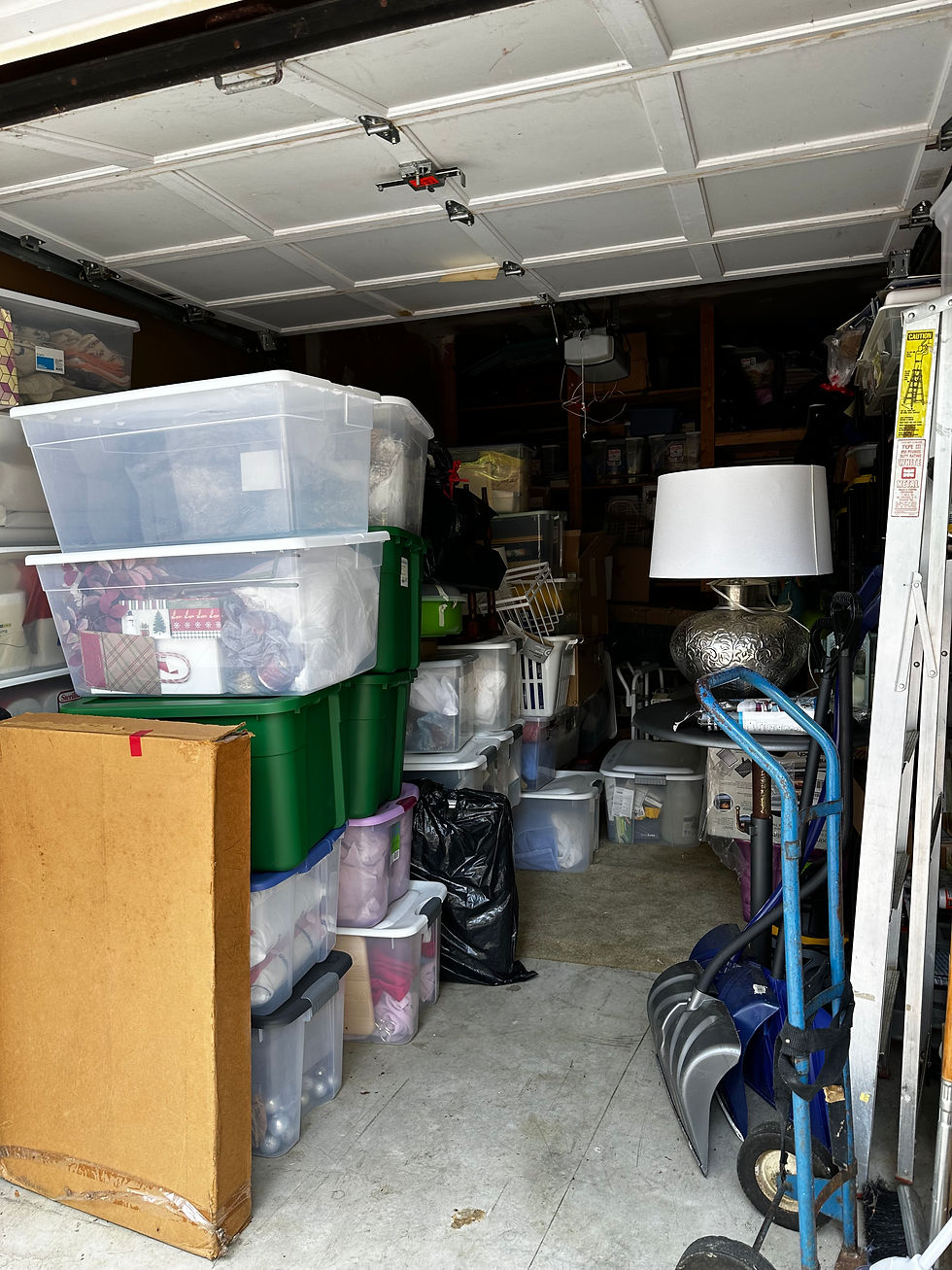
The garage you quietly pretend doesn’t exist
The desk where you can’t seem to focus
Pick one space.
Not the whole house.Not even the whole room.
Just one small area.
A drawer. A shelf. One section of the counter.
Set a timer for about 20 minutes.
Remove what doesn’t belong, wipe the space down, and only put back the things you actually use.
Then stop for a moment and look at it.
That small sense of relief you feel?
That’s exactly why decluttering works so well as self-care.
When the Project Feels Too Big to Start
Sometimes the clutter that stresses you out the most isn’t just messy — it’s emotionally heavy.
It might be years of paperwork you’ve been meaning to sort through.A garage full of “I’ll get to that someday.”Or a closet holding items tied to difficult memories.
When a space carries that kind of weight, getting started can feel overwhelming.
And the longer it sits, the bigger it feels.
That’s often when people decide to bring in a professional organizer.
Not because they can’t do it themselves — but because having support makes the process so much easier.
A good organizer helps you:
Break large projects into manageable pieces
Make decisions without overthinking every item
Create systems that work for your real life
Actually finish projects that have been lingering for years
And once one stressful area is cleared, something interesting usually happens.
Everything starts to feel more manageable.
You stop avoiding that room.You walk through the space without tension.Your home starts to feel lighter again.
One small win often creates momentum for the rest of the house.
A Simple Truth About Clutter

Your home doesn’t have to look perfect to deserve care.
Life gets busy.Counters collect mail.Closets fill up faster than we expect.
That’s normal.
But if your home consistently makes you feel overwhelmed — if you feel a little wave of stress every time you walk into a room — that’s worth paying attention to.
Decluttering isn’t about perfection.
It’s about making daily life easier.
Easier to find things.Easier to start your morning.Easier to relax at the end of the day.
And sometimes the first step toward feeling better is as simple as clearing out one drawer.
Whether you start with one drawer this weekend or decide to bring in professional help, taking that step is an act of self-care.
And you’re worth it.
HAPPY ORGANIZING!
Frequently Asked Questions About Decluttering and Stress
Can clutter really cause stress?
Yes. Clutter creates visual noise that your brain has to process constantly. Research shows that messy environments can increase stress levels, reduce focus, and make it harder to relax at home.
Why does decluttering feel so good?
Decluttering reduces the number of visual and mental distractions your brain is processing. When your environment feels calmer and more organized, your mind often feels calmer too.
Where should I start decluttering if I feel overwhelmed?
Start small. Choose one drawer, shelf, or surface that bothers you the most. Set a timer for 20 minutes and focus only on that space. Small wins create momentum.
How does decluttering improve mental health?
Clearing clutter can reduce feelings of overwhelm, improve focus, and give you a stronger sense of control over your environment. Many people notice their stress levels drop once cluttered areas are addressed.
When should I hire a professional organizer?
If clutter feels emotionally overwhelming, projects feel too big to start, or you’ve been stuck for a long time, a professional organizer can help break the process into manageable steps.


Comments